


Articles

Electronic music, big beat and clubbing go together - but that’s only a small part of the truth. In fact electronic music was here long before clubbing, and thanks to enlightened teachers at JAMU it was doing very well indeed in Brno as early as the 1960s. That is, long before synthesizers and sequencers appeared on rock podiums, long before any old band had a computer, long before the first dance parties in glittering halls and dark cellars. Today electronic music is one of music’s most omnipresent genres: neither dance parties nor contemporary operas can do without it. Electronic big beat music has occupied reggae and swing, remixing is a daily affair, Brno artists have learned to sell instruments they built themselves to the whole world and to amplify an old knitting machine. As early as 1907 the composer Ferruccio Busoni dreamt of the future potential of electronic music, but not even his imagination and genius could have anticipated what Thaddeus Cahill’s first weird experiment with an immense electrical organ would lead to one day. more
Although cultural life has suffered significantly in the last two months, people's desire for an artistic experience has not faded. On the contrary – art and its role in our lives are perhaps needed even more than before. Hence, although concert halls are empty and listeners are forced to visit them only through recordings of their favourite concerts, a number of well-made music media created (not only) in the beginning of the year helps to bridge over this unfortunate period. more
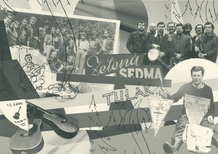
”It’s a long journey to the West, / Pointless, fruitless is the longing,” began the first cowboy song recording issued by R. A. Dvorský’s publishing house in 1939. The theme and tone reflect the “tramping” movement, with its idealized vision of “America” and its unspoiled “nature”, which led Czechs to take to the woods, where they hiked, met round campfires and sang songs modelled on American folk songs and country music. So widespread was the tramping phenomenon that it made its way into popular music, where it long remained. Over time, the romance of the cowboy and the idea of a free life on the Great Plains found their way not only into songs sung by such late twenti- eth-century stars as Karel Gott, Helena Vondráčková and Waldemar Matuška but into social life itself: very few countries in Europe have such liberal laws when it comes to sleeping overnight, or even setting up camp, in the woods. In the past young people in Brno could choose whether to be “city slickers” hooked on discotheques or “wander- ers”, who would head for the main train station every Friday afternoon or Saturday and from there set out on the first train for wherever in the countryside it was heading to. more

Cultivated music, art music, serious music … shifting from one of these messy labels to another usually has one aim: to avoid the problematic “classical music”. Today this misleading term covers everything that was heard in medieval churches, in the course of Baroque festivities, in the age of bourgeois revolutions and at experimental concerts that saw shoes being thrown at the performers. Brno happily recalls visits here by Wolfgang Amadeus Mozart, Franz Liszt and Bedřich Smetana, short as they were. But it also remembers the Hollywood film music celebrity Erich Wolfgang Korngold, who spent his earliest years in Brno. Brno might appear to be a city of brief sojourns, were it not for Leoš Janáček, who made it his home and in the course of the past forty years has become one of the world’s most frequently performed composers. But the musical history of the city mirrored the turbulent political changes in the nineteenth century and drew on the enormous energy released by the creation of a free Czechoslovakia in 1918: never since then has its progressive character vanished completely. more

Operetta is a wilful child that stopped obeying its parents and ran away from the opera house. Its origin is much more explicable when one considers France, where operetta emerged in the midnineteenth century as an entertaining and often very sarcastic polar opposite to the megalomaniacal productions of “grand opera”. In Brno, as was the case everywhere else in the world, operetta appealed to the broad public, offering both social satire as well as quite conventional entertainment. In the interwar period, thanks to the enlightened lead of Oldřich Nový, it took on a sophisticated polish. Later the Brno theatre scholar Ivo Osolsobě was able to give it a solid theoretical basis, and so move on from the stultified operetta to the lively musical. Today Brno boasts not only a theatre built specifically for musicals but a degree programme in Musical Acting at JAMU. Through the musical A Ballad for a Bandit the brigand Nikola Šuhaj set off from Brno into the world of theatre and film, while Brno’s Liza Doolittle made her living as My Fair Lady of Zelný trh, Brno’s ancient market square. And so we’ve come full circle: the square is the site of the Reduta theatre, operetta’s home in times past. more

“Every theatre is a madhouse, but opera is the ward for the incurable,” claimed Franz von Dingelstedt, the first director of the Court Opera House in Vienna. And he was right, for once someone’s fallen in love with opera, that’s it. Opera’s a stepchild of the Renaissance, with a Baroque wet nurse: it was on the cusp between these two great eras that the idea of purely sung theatre saw the light of day. Step by step, composers taught the art of singing to classical gods and brave women, Christian heroes and pagan enchantresses, a Seville barber, a Babylonian king and the Czech Mařenka and Jeník. But it was only here in Brno, thanks to Leoš Janáček, that truly psychological musical drama was born, drama that sees into a person’s heart. Today the Brno opera company has its home in a theatre named after Janáček, mounts a major festival devoted to the city’s most famous composer every two years, and has set its sights very high. “The more opera is dead, the more it flourishes,” pronounced the philosopher Slavoj Žižek when speaking of this fanatically loved but just as fanatically rejected genre. By this measure, opera in Brno these days must have been dead at least a dozen times. more
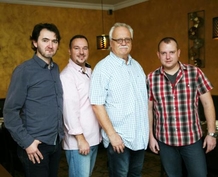
Bands that have been present on the scene for several decades have two options: Either they make a living from their own substance, and therefore from hits of the past. Or they are still trying to come up with something new, sometimes with the wishes of conservative fans in spite of it. The "Brno-based" group Poutníci (meaning Pilgrims in Czech), who are celebrating their 50th anniversary this year, are somewhere halfway in between. They still play Panenka [The Doll], which the audience demands, but fortunately they didn't get stuck and – maybe after a long time, but still – they come up with a new serial album, which should not pass unbeknown to the fans of Czech country and bluegrass. more

The Czech Radio Brno folklore section decided that it did not want to idle during the isolation that affected almost the entire world. In addition to "home" broadcasting taking place directly at editors' homes, it also announced a challenge. Listeners can now submit their music recordings to the radio editors; these recordings will eventually be broadcast on air. more

To write a guide to music in Brno in the past and present means digging deep into one’s own recollections and those of others as well as into sources with varying degrees of reliability, and as far as possible not believing anything automatically but always asking “Did this really happen just like that?” And in doing so, to be very, very suspicious of one’s own memory. Two basic questions that cropped up in connection with almost every sentence were “What is it about this band or that event that makes them special? Would someone who’s never been to Brno and has no ties with the city find it interesting?” more

Due to the impact of extraordinary measures taken because of the Covid-19 pandemic on stakeholders of the cultural and creative industries in Brno, Brno leaders and the Department of Culture of the Brno City Municipality are working intensively on a set of precautions for minimizing the damages. At the same time, communication is conducted on all levels of public administration, predominantly in collaboration with the Institut umění – Divadelní ústav [Arts and Theatre Institute], which is mapping the situation on the nationwide level. Until 22 March 2020 you can help assess the current situation by means of an online survey (the link is provided below). Further steps will be taken according to the results of the survey. more

Last year, after several years of stagnation, Brno's folklore enthusiasts woke up again and began organizing gatherings with dulcimer music, folklore parties, etc. at several different venues. This is certainly gratifying. However, motivation, experiences and concepts differ. One of them is We <3 folklore in the Metro music bar. more

Spontaneous joy of dancing is hiding behind the mysterious cry Šej-Haj-Hop! That is why the new school of Slovak folk dance in Brno chose it as its name. There are three friends behind it – Michal Janšto, Edita Borščová and Ondrej Mišík, who all met a few years ago at VSĽPT Poľana. more

We know several singing cello players from the domestic music scene: Olin Nejezchleba, who recorded his first solo album at the age of fifty; Tara Fuki, which even consists of two singing cellists; and Natálie Velšmídová, who shone out bright with her folk song remakes at the end of the millennium. However, Pavel Čadek is the only true singer-songwriter in the sense that he writes his own songs and uses cello as his main (or even the only) accompanying instrument. Moreover, thanks to his classical music training and his past with The Eclipse, a harder cello group, he is able to work with the cello freshly and, above all, in a non-folk manner, and that is why his instrument sometimes plays more than just an accompanying role. Although his debut album would be sufficiently varied even with cello only, Pavel decided to work with more sophisticated arrangements and invited accordionist Ondřej Zámečník, cajon player Jakub Špiřík and some other guests in episode roles to the studio. more

The cellist Josef Klíč, concert master of the Janáček Theatre in Brno, is close to classical music as well as underground, works together with poets and wrote several essential compositions exploring the border between contemporary and alternative music. His new solo album, Josef Klíč & His One Man Cello Squad, contains songs without words, which is, as Klíč pointed out in an interview last year for our server, a form that "existed already in the Renaissance times". And he explains: "A song without words is a composition that you can put your own lyrics into. It has a melody and you can sing the lyrics to it for yourself. Therefore, it must be a song with a powerful melody." more

If a band releases a new album after ten years and calls it Dej si čas [Take Your Time], it sounds like a pleasant self-irony. But what is ten years against delays of other bands, whose fans had to wait for new albums for eighteen (AG Flek) or even thirty years (Progres 2). For Mošny, it was said that the new album started to emerge a few years ago, but the group wanted to include some brand new songs, which they needed to rehearse and finish. more

The international Janáček Brno festival has put together a packed programme for its 10th edition in 2026, held under the motto Roots. At the heart of the festival are performances of all the operas of Leoš Janáček (1854–1928), staged by the Janáček Opera company of the National Theatre Brno. Thursday’s programme featured The Excursions of Mr Brouček, conducted by Marko Ivanović. The production’s director, Robert Carsen, also travelled to Brno for the occasion. more

The latest concert in the Exposition of New Music festival, held yesterday at Brno’s Besední dům, was devoted entirely to piano music. It took listeners into the fascinating world of spectral music, the instrument’s internal acoustic structures and the phenomena of resonance. To bring the instrument’s hidden transformations of sound and natural inharmonicity fully to the fore, two different types of piano stood in the centre of the hall: a standard grand and a modified piano, with rubber inserts and beaters placed among the strings. more

A deep dive into the world of spectral music, acoustic experimentation and free improvisation awaited audiences at a concert held on Tuesday at Brno’s Besední dům as part of the 38th Exposition of New Music festival, subtitled Ars Spectrum. The evening brought together three works exploring the limits of listening, the inner structure of sound and the interplay between the concert hall and the world outside. A defining feature of the concert was the unconventional use of space: rather than sitting on stage, the musicians were positioned in the middle of the hall, surrounded by the audience, microphones and loudspeakers. more

As part of the 23rd edition of the early music concert series Barbara Maria Presents, a chamber concert devoted to Dvořák’s early songs took place on 1 October. The Brno audience had a unique opportunity to encounter Antonín Dvořák from a different perspective – not as the mature master of the great symphonies, but as a composer who, in the 1870s, was still experimenting and searching for his own musical language, while also exploring the foundations of effective Czech declamation. Soprano Martina Janková and harpsichordist, organist and fortepianist Barbara Maria Willi presented a programme of songs complemented by piano miniatures by Robert Schumann. more

Brno Philharmonic opened its 2026/2027 concert season on Sunday 20 September at the Janáček Theatre. The orchestra was joined for the occasion by guest conductor Petr Altrichter, its former chief conductor. Under the motto All Roads Lead to Brno, this season’s repertoire brings together composers and musical events with connections to the city and its rich cultural life. The opening concert therefore featured Johannes Brahms’s Symphony No. 2, a particularly fitting choice given that Brahms performed as a pianist at Brno’s Reduta in 1867. The programme opened with César Franck’s symphonic poem Psyché, for which the orchestra was joined by the Czech Philharmonic Choir Brno under the direction of Petr Fiala. more

The tenth edition of the international opera and music festival Janáček Brno 2026 will take place from 13 October to 17 November 2026. With Janáček’s complete operatic output at its heart, alongside a programme of concerts and accompanying events, the festival offers a unique celebration of the composer’s work on an international scale. As part of the festival preview, National Theatre Brno is presenting four operas by Leoš Janáček (1854–1928) ahead of the festival itself. The series began on Saturday, 5 September, with The Makropulos Affair, which also opened Brno’s 2026/27 opera season. more

The fifth edition of the Štetl Fest of Jewish culture in Brno began on Wednesday, 26 August. And the very first day had a great deal to offer. Among other things, it showed that even an alternative theatre venue can host a world-class concert – and one that is free of charge. The opening ceremony featured a performance by the band Der Šenster Gob, with Jewish singer Lea Kalisch, in the courtyard of the Husa na provázku theatre. more

The summer open-air Festival Špilberk, organised by the Brno Philharmonic, brought classical music and other genres to the grand courtyard of Brno’s Špilberk Castle during the third week of August. The festival’s 27th edition culminated on Sunday, 23 August, with Carl Orff’s cantata Carmina Burana, conducted by Dennis Russell Davies with the Czech Philharmonic Choir Brno. The concert also marked a symbolic farewell to trombonist Jiří Vydra, who brought his 45-year career with the Brno Philharmonic to a close that evening. more

The Špilberk Festival organised by the Brno Philharmonic has put together a rich programme for the third week of August. This year’s 27th edition of the traditional open-air festival will once again fill the grand castle courtyard with music, with the aim of making classical music accessible even during the summer holidays. Tenor Štefan Margita chose this occasion to celebrate his 70th birthday. Together with soprano Jana Šrejma Kačírková and conductor Jan Kučera, Margita presented a concert of opera and musical arias on Saturday, 22 August. more

Every year, ahead of the new concert season, the Brno Philharmonic organises the week-long open-air Špilberk Festival in the great courtyard of Brno’s Špilberk Castle, featuring a diverse programme of genres and ensembles. On Thursday, 20 August, the festival project entitled Erik Truffaz & Gustav Brom Czech Radio Big Band: Around Miles was performed to commemorate the centenary of the birth of jazz trumpeter Miles Davis. This third concert in the series was co-produced with JazzFest Brno and Czech Radio and broadcast live on Czech Radio’s Vltava station. more

The third concert of the 35th BRNO ’26 International Guitar Festival and Masterclasses took place on Tuesday, 4 August, in the Council Chamber of the New Town Hall. World-renowned guitarist Jorge Caballero presented a solo recital of works by classical composers arranged for acoustic guitar. On this occasion, the festival director Vladislav Bláha and his wife Tatiana Bláha Drobyš presented their new CD Dances Across the World and Through Time. more

The concert by the Brno Contemporary Orchestra in the courtyard of Brno’s Špilberk Castle on Tuesday, 16 June, offered the audience a chance to hear the castle’s carillon in quite a different guise – as a solo musical instrument. Entitled Vězeňské zvony (Prison Bells), the performance alluded not only to the existence and function of the carillon itself but also to the complex history of the castle. The concert featured harpsichordist Daria Savvateeva, soprano Irena Troupová, and Petr Hladík as carillon player. more

The prologue to the Concentus Moraviae festival took place, unusually, in the Italian city of Cremona – home of the Walter Stauffer Foundation and Academy, which nurtures string teaching and the city’s traditions – as early as mid-April. This year the Foundation concluded a memorandum of cooperation with the festival, resulting in the String Quartet Master Classes project in Kroměříž on 16–18 June. The stage was set on 15 June at Pernštejn Castle, where the Italian Quartetto di Cremona joined forces with cellist Peter Jarůšek for a memorable concert. more
A Piece of Kroměříž in Brno at the Church of St John

The final concert of the 14th season of the Bacha na Mozarta (Watch Out for Mozart) series drew audiences to the Minorite Church of St John on Monday, 8 June, for a programme drawing on the collections of the Kroměříž Music Archive. The evening’s programme brought together specific liturgical forms with the representational demands of the courtly culture of the time. Performed by the SILENTIUM! ensemble under the direction of Tomáš Netopil and with choral preparation by Tereza Válková, the concert featured works by Pavel Josef Vejvanovský, Giovanni Felice Sances, Franz Ignaz Biber, and Philipp Jacob Rittler, some in their modern-day premieres. more

The Concentus Moraviae festival presented its sixteenth concert of the year, thematically dedicated to the number four, at Valtice Castle on Sunday, 7 June. This year’s international showcase brings together quartets of the most varied instrumental combinations and genres, presenting programmes across Moravia and Lower Austria centred on the quartet repertoire. In this spirit, the Baroque theatre of Valtice Castle hosted, in collaboration with the Young Classical Artists Trust, a concert focused on world music performed by the international Fibonacci Quartet. The young quartet – specifically Kryštof Kohout and Luna De Mol on violin, Elliot Kempton on viola, and Findlay Spence on cello – chose masterpieces by Leoš Janáček (1854–1928) and Béla Bartók (1881–1945). more
Editorial
Janáček Theatre to Host Second Year of International Dance Competition

EDCB 2026, the second edition of the international dance competition, begins today at the Janáček Theatre. The competition focuses not only on classical ballet but also on contemporary dance, which allows young dancers specialised in contemporary dance to participate. The international jury will judge the participants in four age categories. more
Applications for the Mikulov Piano Courses Opening Soon

The summer holiday piano courses are intended for pupils and teachers of elementary art schools. The 27th course year will take place from 14 to 21 August 2026 in Mikulov. more
Brno Philharmonic Celebrates the Eightieth Birthday of Pēteris Vasks

Pēteris Vasks, one of the world's most important composers, will turn eighty in April. The Brno Philharmonic will join the congratulations with three concerts. From today until Friday, listeners can look forward to Terezie Fialová, her partner Jiří Bárta and British actor Simon Callow. The concerts will be conducted by one of the most prominent contemporary British conductors Rumon Gamba. more
ŽENFEST pod třešní 2026: Iva Bittová, Bára Zmeková, Beata Bocek and others

The ŽENFEST festival will celebrate women's artistic creation in Trchova zahrada. Iva Bittová and Duo Jedlinský & Fischer, pianist Bára Zmeková, singer-songwriter Beata Bocek and also 14-year-old Bea.K – one of this year's discoveries. The festival host is singer-songwriter Martina Trchová, who will exhibit her paintings this year. The programme will also include activities for children. more
Conductor Jakub Hrůša Honoured as Artist of the Year in Bamberg

Jakub Hrůša, a native of Brno, received the Artist of the Year Award, a title awarded to him by the jury of the International Classical Music Awards in January this year. more
Tickets for the Dokořán Festival at MdB Go on Sale Today

The Brno City Theatre will once again host a musical theatre festival in June. The only professional theatre festival of its kind in the Czech Republic, Dokořán for Musical Theatre will offer a showcase of ten of the most remarkable productions representing significant work currently trending in the genre on Czech and international stages. The programme also includes accompanying concerts on the Dvorana Stage and a final debate in the MdB Club. more
Crocodile Orchestra Makes Its Brno Debut at the Hall of the Merciful Brothers

Crocodile Orchestra is a young chamber orchestra, which, as the "dragon" in its name suggests, is based in Brno. It consists of young musicians, mostly students of leading Czech and foreign music schools. Later this week, they will make their concert debut in their hometown. more
Janáček Opera to Premiere Handel’s Agrippina

Agrippina will be performed on the Brno stage for the first time in the already proven collaboration with the Baroque orchestra Collegium 1704 under the baton of Václav Luks, directed by Martin Glaser, set design by Petr Vítek and costumes by Martin Chocholoušek. more
Opera Diversa Ensemble to Present SUPERGRRRLS! or Opera Heroines Save the World

The work is intended for children and young audience. It consists of three distinct sketches, each telling the story of a different opera heroine and composed by a different composer – among other reasons, to attract a new generation not only of audiences, but also of creators. more
Janáček Brno Beyond Czech Borders: Exclusive Concerts in Paris and Brussels

The Janáček Brno International Opera and Music Festival officially crosses the borders of the Czech Republic for the first time in its history. Before launching the complete Leoš Janáček opera cycle in autumn, the festival will bring an exclusive taste of its atmosphere to the cultural centres of Europe. In a series of three concerts in Paris and Brussels in April, it will present gems of Czech chamber music. The programme performed by the internationally renowned Zemlinsky Quartet will guide the audience through the works of Josef Suk, Antonín Dvořák, Bedřich Smetana and, of course, Leoš Janáček. more